
Introduction
Stress has become a common part of modern life. Whether it’s due to work pressure, financial concerns, personal relationships, or health issues, almost everyone experiences stress at some point. While a small amount of stress can be helpful in motivating us, chronic stress can negatively impact both physical and mental health.
Understanding the signs of stress and learning how to manage it naturally is essential for maintaining a healthy and balanced lifestyle. In this guide, we will explore the symptoms of stress and effective natural ways to reduce it.
What is Stress?
Stress is the body’s natural response to challenges or demands. It triggers the “fight or flight” response, releasing hormones like cortisol and adrenaline.
Types of Stress:
- Acute Stress – Short-term stress (e.g., deadlines)
- Chronic Stress – Long-term stress (e.g., financial problems)
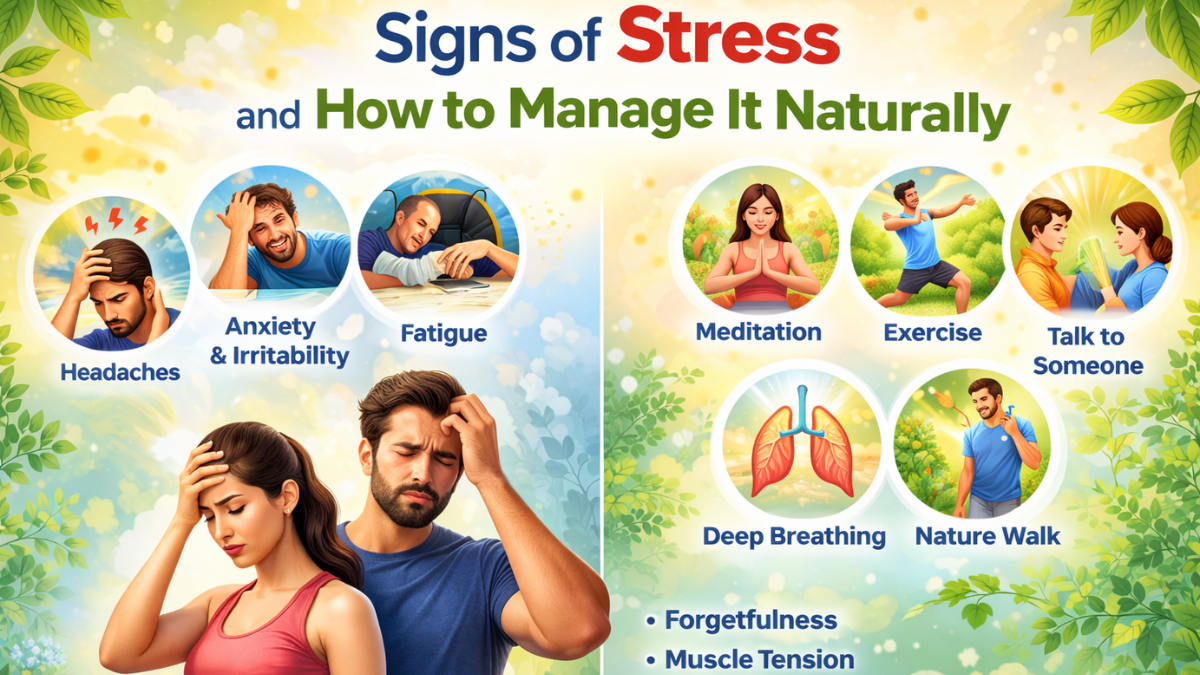
Common Signs of Stress
Stress affects people in different ways. It can show up physically, emotionally, mentally, and behaviorally.
1. Physical Symptoms of Stress
Your body often gives the first warning signs of stress.
Common physical signs:
- Headaches
- Muscle tension
- Fatigue or low energy
- Sleep problems (insomnia)
- Digestive issues
- Increased heart rate
Why it happens:
Stress hormones affect your body systems, leading to physical discomfort.
2. Emotional Signs of Stress
Stress can strongly impact your emotions and mood.
Emotional symptoms:
- Anxiety
- Irritability
- Mood swings
- Feeling overwhelmed
- Lack of motivation
3. Cognitive (Mental) Symptoms
Stress can affect your thinking and concentration.
Signs include:
- Difficulty focusing
- Forgetfulness
- Negative thinking
- Constant worrying
4. Behavioral Changes
Stress often changes your daily habits and behavior.
Common changes:
- Overeating or loss of appetite
- Increased alcohol or smoking
- Social withdrawal
- Procrastination
When Stress Becomes Dangerous
Chronic stress can lead to serious health problems if not managed properly.
Possible risks:
- Heart disease
- Depression
- High blood pressure
- Weakened immune system
How to Manage Stress Naturally
The good news is that stress can be managed effectively with simple and natural methods.
1. Practice Meditation and Mindfulness
Meditation helps calm your mind and reduce stress levels.
How to start:
- Sit quietly for 10 minutes
- Focus on your breathing
- Let go of negative thoughts
Benefits:
- Reduces anxiety
- Improves focus
- Enhances emotional health
2. Try Deep Breathing Exercises
Breathing techniques can quickly calm your nervous system.
Simple exercise:
- Inhale for 4 seconds
- Hold for 4 seconds
- Exhale for 6 seconds
Benefits:
- Reduces heart rate
- Promotes relaxation
3. Stay Physically Active
Exercise is one of the best natural stress relievers.
Activities:
- Walking
- Yoga
- Cycling
- Home workouts
Benefits:
- Releases endorphins (feel-good hormones)
- Improves mood
- Reduces tension
4. Get Enough Sleep
Sleep is essential for stress recovery.
Tips:
- Maintain a regular sleep schedule
- Avoid screens before bed
- Create a calm environment
5. Eat a Healthy Diet
Nutrition plays a key role in managing stress.
Include:
- Fruits and vegetables
- Whole grains
- Nuts and seeds
Avoid:
- Excess caffeine
- Sugary foods
6. Limit Screen Time
Too much screen time can increase stress and anxiety.
Tips:
- Take regular breaks
- Avoid social media overload
7. Spend Time in Nature
Nature has a calming effect on the mind.
Ideas:
- Go for a walk in a park
- Sit in sunlight
- Practice outdoor activities
8. Talk to Someone
Sharing your feelings can reduce stress.
Options:
- Friends
- Family
- Counselor
9. Listen to Music or Do Hobbies
Engaging in activities you enjoy can relax your mind.
Examples:
- Music
- Reading
- Gardening
- Painting
10. Practice Gratitude and Positive Thinking
A positive mindset helps reduce stress.
How to practice:
- Write daily gratitude notes
- Focus on positive aspects
Common Mistakes in Stress Management
- Ignoring stress symptoms
- Using alcohol or smoking
- Overworking without breaks
- Lack of sleep
Tips to Prevent Stress Daily
- Plan your day
- Take short breaks
- Stay organized
- Maintain work-life balance
Conclusion
Stress is a part of life, but it doesn’t have to control you. By recognizing the signs of stress early and adopting natural stress management techniques, you can lead a healthier and happier life.
Simple habits like meditation, exercise, proper sleep, and a healthy diet can make a big difference. Start small, stay consistent, and prioritize your mental well-being.
FAQs (SEO BOOST)
1. What are the first signs of stress?
The first signs include headaches, irritability, fatigue, and difficulty concentrating.
2. How can I reduce stress naturally?
You can reduce stress through meditation, exercise, healthy eating, and proper sleep.
3. Can stress affect physical health?
Yes, chronic stress can lead to heart problems, high blood pressure, and other health issues.
4. Is stress normal?
Yes, stress is normal, but it should be managed properly to avoid health problems.

SamhithaHealth & Wellness Content Writer
a Health & Wellness Content Writer with over 6 years of experience creating research-based health articles. She specializes in nutrition, weight management, diabetes care, skin health, and healthy lifestyle practices. Here content is carefully written using trusted medical and scientific sources to ensure accuracy and clarity for readers.